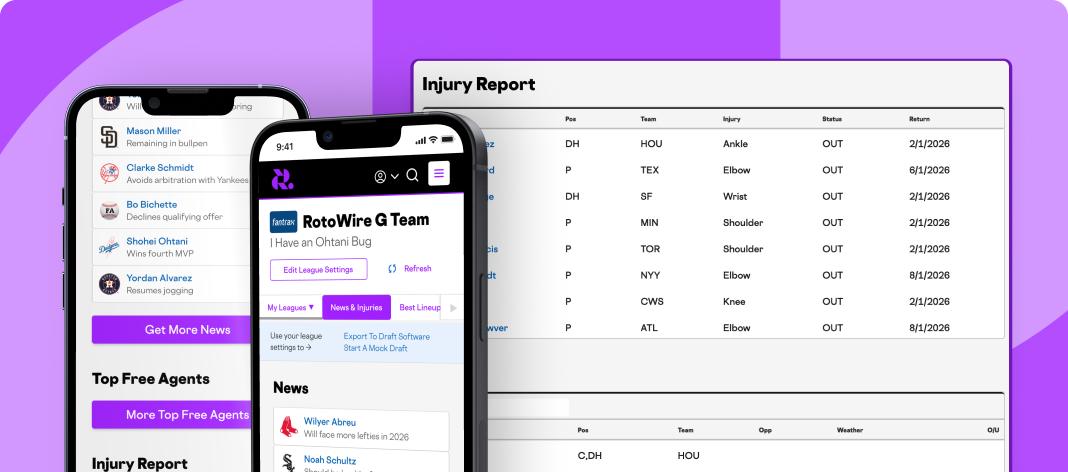
Deciding how to approach selecting injured players during your fantasy baseball draft can make or break your season. Much of the debate over who to pluck off the MLB injury report, and when, will come down to roster settings and league build. But these players can be had at a cheaper price and really become difference-makers down the stretch when the stats matter most.
It's important to pinpoint specific injured players on your fantasy baseball rankings so you find the balance between not taking them too early and not waiting so long that another manager grabs them up. Weighing the pros and cons while using RotoWire's tools to figure out the sweet spot can be the difference between winning and losing late in the season.
Understanding the Injured List (IL) in Fantasy Baseball
Prior to draft day, players typically are put on the injured list (IL) by teams if they're still recovering from offseason surgery or injured themselves during spring training.
It's important to note that being on the IL is an official designation, which is different from players who are banged up and take a few days off. Many fantasy baseball roster settings include IL spots for managers to put those players, freeing up an active roster spot like MLB teams do. The minimum required time on the injured list is 10 days for hitters, 15 days for pitchers and seven days of any concussion-related injuries. There's also a 60-day injured list for long-term injuries.
"If you're going
Deciding how to approach selecting injured players during your fantasy baseball draft can make or break your season. Much of the debate over who to pluck off the MLB injury report, and when, will come down to roster settings and league build. But these players can be had at a cheaper price and really become difference-makers down the stretch when the stats matter most.
It's important to pinpoint specific injured players on your fantasy baseball rankings so you find the balance between not taking them too early and not waiting so long that another manager grabs them up. Weighing the pros and cons while using RotoWire's tools to figure out the sweet spot can be the difference between winning and losing late in the season.
Understanding the Injured List (IL) in Fantasy Baseball
Prior to draft day, players typically are put on the injured list (IL) by teams if they're still recovering from offseason surgery or injured themselves during spring training.
It's important to note that being on the IL is an official designation, which is different from players who are banged up and take a few days off. Many fantasy baseball roster settings include IL spots for managers to put those players, freeing up an active roster spot like MLB teams do. The minimum required time on the injured list is 10 days for hitters, 15 days for pitchers and seven days of any concussion-related injuries. There's also a 60-day injured list for long-term injuries.
"If you're going to draft a player who's yet to even return to the field and are willing to wait through many months of potential setbacks, that player better be a genuinely elite difference maker and not merely someone who'd be nice to have," said RotoWire baseball expert Erik Halterman.
Types of IL Players Worth Selecting on Draft Day
The fantasy baseball season is long. That's important to remember when considering drafting injured players. The reality is MLB player stats count the same no matter when those injured players are activated. If your roster settings include IL spots, most fantasy-relevant injured players are worth taking a flier on. You'll need to consider when to take them, but there's almost always great value in these players by season's end.
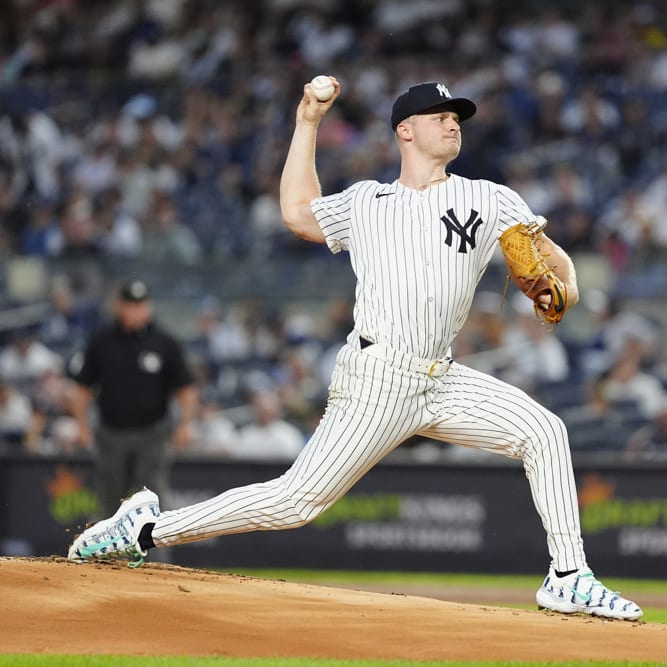
A great example is Yankees starter Carlos Rodon. His 2025 elbow surgery means he won't be ready for Opening Day, but he still has MLB projections of 24 starts, 11 wins, and 152 strikeouts. That's more than enough to be a viable option in Rotisserie leagues, and the fact that he'll be back for most of the season means he makes sense in head-to-head leagues. He's ranked 18th in fantasy baseball rankings, but should out-perform that once he's on the mound. You can likely get him a few rounds earlier than that, and he has a chance to be a top-40 starter by season's end.
How League Settings Affect IL Draft Strategy
League settings will ultimately dictate the type of risk and reward that goes into drafting injured players. The more IL spots or bench spots you have, the less an injured player will hurt your overall counting numbers. That means you can reach a little bit on draft day to go after those types of players. A league with no bench or just one IL spot will make it difficult to roster injured players at the outset of the season.
"With no IL spots, I certainly don't want to leave the draft with more than one currently injured player, and he better not be someone I have to stash for too long," Halterman said. "I also don't want to draft too many known injury risks, as I don't want my whole bench to be clogged by injured players for half the season."
Your league type matters, too. In a re-draft league, drafting an injured player who may only play a month or two may not be worth it. But in a keeper or dynasty league, you can play the long game and grab them to create value in future seasons.
Balancing Early-Season Risk vs. Long-Term Upside
The reality with injured players is that you're sacrificing some early-season production by drafting them. This can be easier to stomach in head-to-head leagues or with deeper benches. Having an actual fantasy playoffs in your league also makes it easier, while Rotisserie leagues will make it more difficult.
"If you choose to draft a player who's currently injured, you're deliberately choosing to make your team worse in April in exchange for making it better in September. That's a trade that becomes much more appealing in leagues with playoffs, since in those leagues, September really does matter more than April," Holterman said.
It may make sense for fantasy baseball managers to also consider how their draft has played out in the early stages to see if drafting an injured player for future production is logical. If you draft ironmen like Juan Soto, Pete Alonso or Vladimir Guerrero Jr. (who are all projected to play 155+ games), you may be strong in the early part of the season and be able to use an earlier-than-expected draft pick on an injured player. RotoWire's fantasy baseball draft assistant can help managers decide when it's the right time to take a chance on an injured player.
Common Mistakes When Drafting Players on the IL
The most common mistake when drafting players on IL is not understanding your roster settings. Simply put, leagues with thin benches don't lend themselves to taking players on IL. Every game, plate appearance and inning pitched is going to matter. Yes, IL-eligible players may make a difference later on in the season, but fantasy baseball teams may be out of the running to compete for a title by the time they return.
Also, make sure the IL-eligible player you're considering is a true difference-maker. Fringe players on IL don't make a ton of sense because there's likely someone on the waiver wire or available in the draft who can match their output with more appearances. If you're going to draft a player on the IL, make sure they'd be a plus contributor when healthy. Don't go crazy on these types of players, but make sure to address them where they make sense.
"I believe it's also a mistake to not fill at least a couple IL spots at the draft if you have any available. There will always be players you want to add in the first waiver period, and it's better to create the space to add those players via an IL move rather than by cutting a player," Halterman said.
Prior to your draft, subscribe to RotoWire and use RotoWire's comprehensive fantasy baseball draft kit to determine which players might be worth it based on your league rules and settings.