The point of any fantasy baseball league is to accumulate the best MLB player stats compared to the rest of your opponents. This can be in weekly, head-to-head settings or season-long Rotisserie leagues. Points leagues work the same, too. At the end of the day, fantasy baseball managers need to have a firm grasp of each category that is counted in your league so you can target those types of players on draft day.
Fantasy baseball is unique in that there are both hitting and pitching categories, with certain players for each. Outside of goalie stats in fantasy hockey, there's nothing else like it. That adds a layer to preparing for draft day using RotoWire's fantasy baseball draft kit and throughout the season. Here's what you need to know, from home runs to saves and everything in between.
Overview of Fantasy Baseball Scoring Categories
There are five traditional hitting categories and five traditional pitching categories. The hitting categories are batting average, home runs, runs batted in, runs scored, and stolen bases. On-base percentage is quickly becoming a replacement for batting average in many leagues. On the pitching side, standard categories are wins, strikeouts, earned run average, WHIP (walks and hits per inning pitched) and saves. More and more leagues are adding quality starts into the wins category and holds into the saves category.
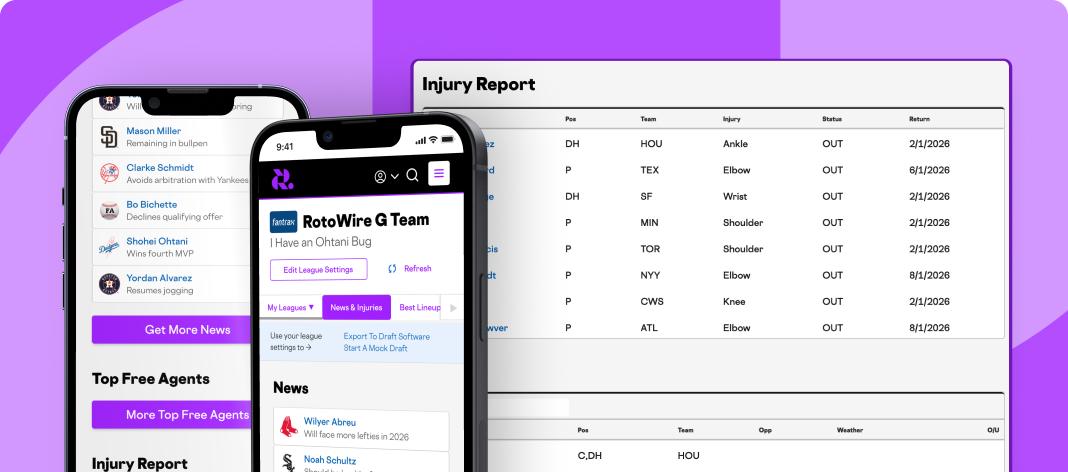
Before anything else, fantasy baseball managers will want to check their league settings and adjust RotoWire's custom fantasy baseball rankings so they have the most accurate information
The point of any fantasy baseball league is to accumulate the best MLB player stats compared to the rest of your opponents. This can be in weekly, head-to-head settings or season-long Rotisserie leagues. Points leagues work the same, too. At the end of the day, fantasy baseball managers need to have a firm grasp of each category that is counted in your league so you can target those types of players on draft day.
Fantasy baseball is unique in that there are both hitting and pitching categories, with certain players for each. Outside of goalie stats in fantasy hockey, there's nothing else like it. That adds a layer to preparing for draft day using RotoWire's fantasy baseball draft kit and throughout the season. Here's what you need to know, from home runs to saves and everything in between.
Overview of Fantasy Baseball Scoring Categories
There are five traditional hitting categories and five traditional pitching categories. The hitting categories are batting average, home runs, runs batted in, runs scored, and stolen bases. On-base percentage is quickly becoming a replacement for batting average in many leagues. On the pitching side, standard categories are wins, strikeouts, earned run average, WHIP (walks and hits per inning pitched) and saves. More and more leagues are adding quality starts into the wins category and holds into the saves category.
Before anything else, fantasy baseball managers will want to check their league settings and adjust RotoWire's custom fantasy baseball rankings so they have the most accurate information on the top players. Even a small tweak from traditional settings can make a significant difference in where certain players are ranked.
Common Hitting Categories and What They Measure
Hitting categories are the most volume-heavy stats in any fantasy baseball league. Hitters play most days (compared to pitchers, who start once every fifth day or closers who appear three or four times per week). Home runs are the most important hitting category because each includes a home run, at least one RBI, a run scored and improves batting average and/or on-base percentage. The top hitters with the top fantasy baseball auction values almost always are plus contributors in home runs.
Runs batted in occur when a player up to bat drives in a teammate through a hit, sacrifice fly/bunt, groundout or walk. Runs scored occur when a player crosses home plate. And stolen bases are when a player reaches base and then steals second base, third base, or home.
Batting average improves when a player gets a hit, while on-base percentage improves when a player gets a hit or draws a walk. Fantasy baseball managers can get a sense of all batters' expected contributions in each category by checking out RotoWire's MLB projections.
Common Pitching Categories and What They Measure
Pitching categories in fantasy baseball are a bit more nuanced. You'll get between one and two starts from each starter per week, and closers' appearances are dependent on how that player's team performs in a given week. Strikeouts are the most versatile pitching statistic because it earns players positive contributions in strikeouts, ERA and WHIP.
Wins are often a starter category, though the top relief pitchers earn a handful of wins each year, too. Saves and holds can fluctuate, but occur when a reliever finishes a non-ninth inning with his team up between 1-to-3 runs (a hold) and when a reliever finishes the game with his team up between 1-3 runs (a save). ERA goes up when pitchers allow earned runs, while WHIP goes up with each walk and hit a pitcher allows.
Category Scarcity, Scoring and Strategy Implications
Not all statistics are created equally. The biggest home run hitters are usually great fantasy contributors because it impacts so many different categories. High-strikeout pitchers are equally great for fantasy baseball teams.
Stolen bases are more scarce but are siloed stats (the Rays' Chandler Simpson is projected to steal the sixth most bases, but is ranked just 205th) and saves are scarce as teams expand their bullpen strategies. What's more, fantasy baseball managers will only get one inning of ERA and WHIP help from a great closer, which makes less of an impact.
How Scoring Categories Can Shape Draft and Roster Decisions
Scoring categories can drastically change your fantasy baseball rankings. It's important to know your league settings, especially if you're in a points league where it's not as cut and dry. From there, determine which categories you want to go after and be ready to adjust that strategy based on how the first few rounds of your draft go.
Once you subscribe to RotoWire, using RotoWire's intuitive fantasy baseball draft assistant will help you see how you stack up against the rest of your league throughout the draft.